

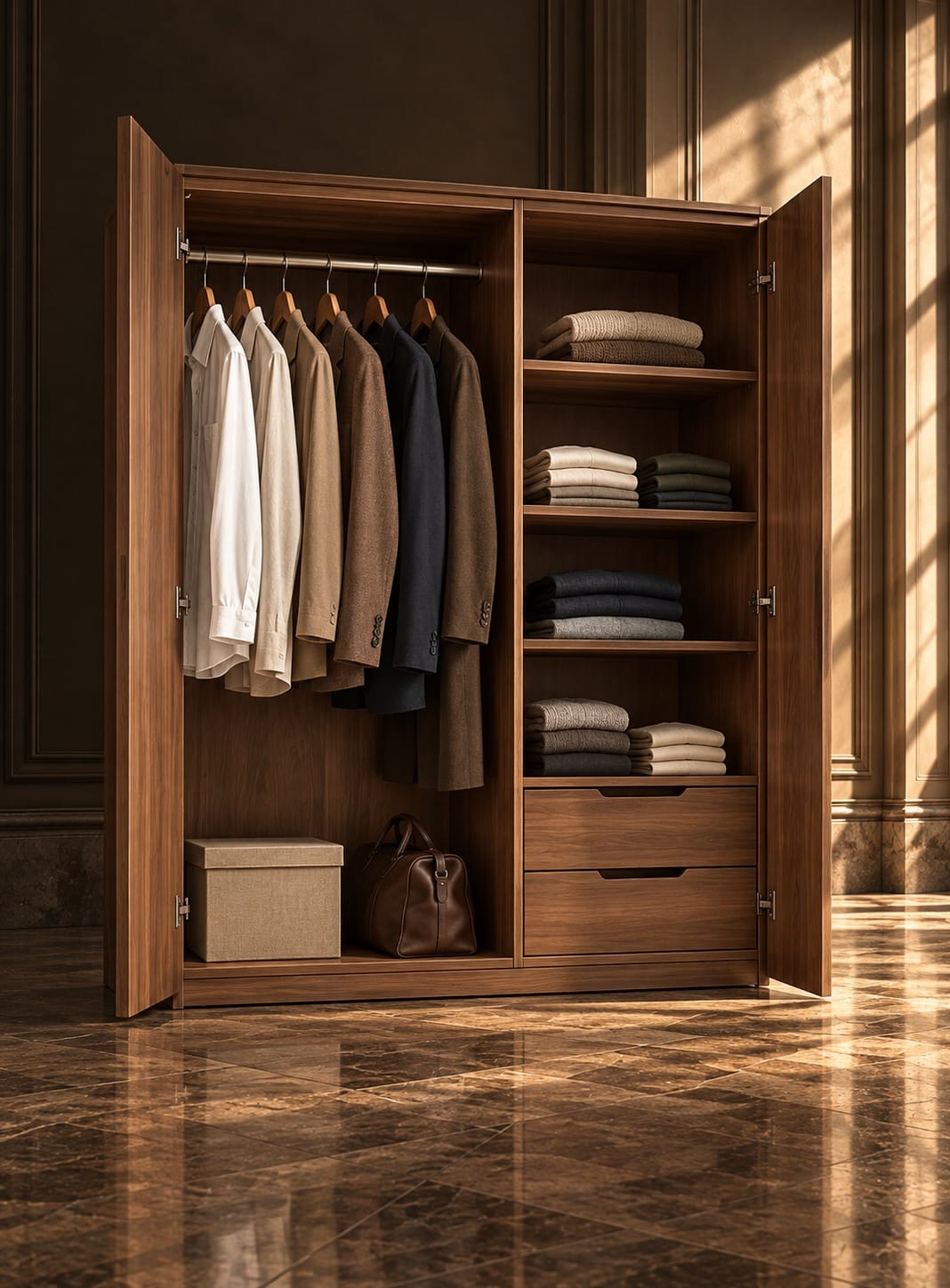
Shirts and folded clothing need different storage arrangements, so review wardrobe shelves vs hanging space against what you actually own. Shelves suit folded clothes and boxed belongings, while hanging space serves garments kept on hangers. The proportion is not fixed for every user. Inventory actual contents and their dimensions, then plan a mix that supports access without unnecessary stacking or unused compartments.
Wardrobe Shelves Vs Hanging Space: Key Checks
- Sort clothes into folded and hanging groups.
- Identify different required hanging lengths.
- Check shelf heights against their contents.
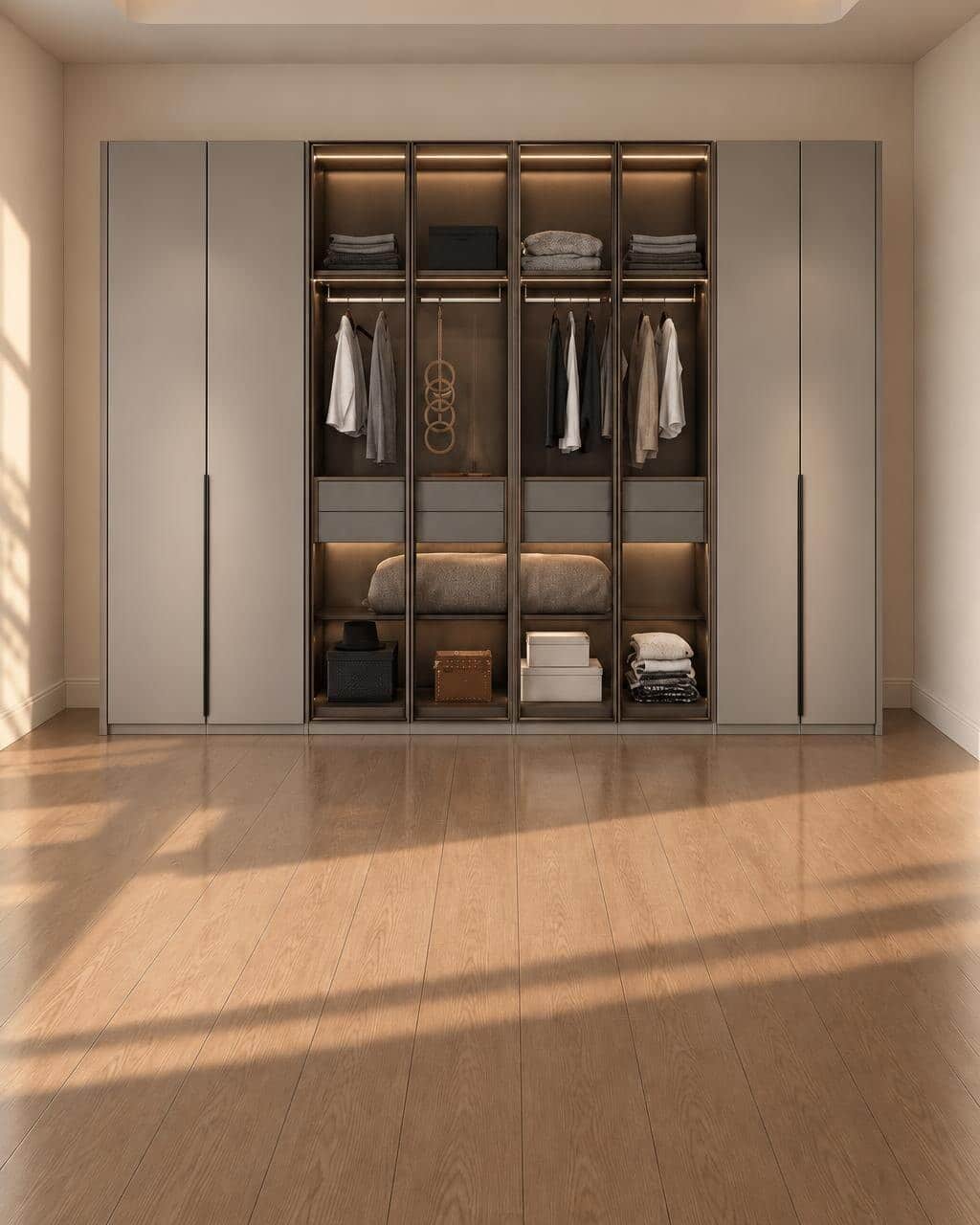
wardrobe shelves vs hanging space: A practical room example
For wardrobe shelves vs hanging space, if most clothes are folded, a large hanging bay may contribute little practical value. Conversely, shelf-heavy storage may frustrate someone whose wardrobe mainly contains longer hanging garments.
Common Mistakes to Avoid
Do not copy shelf divisions from a reference photograph without an inventory, or assume they are adjustable without confirmation.
When assessing wardrobe shelves vs hanging space, use “Sort clothes into folded and hanging groups” as the starting check, then confirm the other two points for the same model or arrangement. The aim is a decision that supports the described use, rather than accepting a general product label.
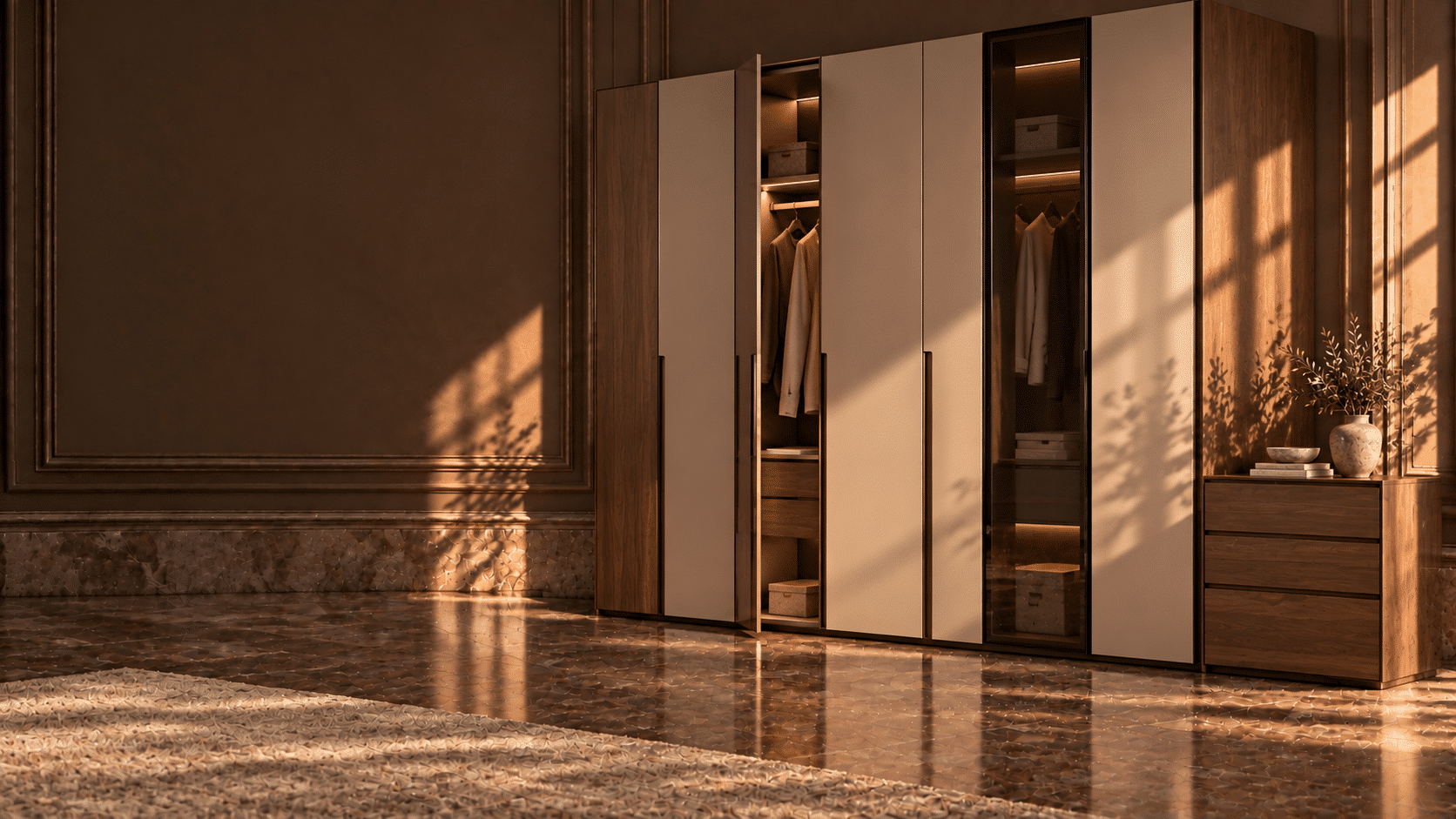
Questions about the selected arrangement
Is an equal shelf-and-hanging split a good solution?
It may suit some users, but the mix should follow actual contents and how they are accessed.
Compare the bedroom furniture collection from EL MALEK Furniture, then assess the chosen model against the checks above. Confirm model-specific details through documented information or written supplier confirmation before ordering.
Follow EL MALEK Furniture for our latest designs on Instagram, Facebook, TikTok, YouTube, LinkedIn.


Leave a Reply