

Measure first, then compare the options in context. A useful review of small dining rooms connects appearance with the room plan, the selected materials and the practical information needed to place an order.
Small dining rooms: Making the Right Choice
Compare the Table, Base and Seating
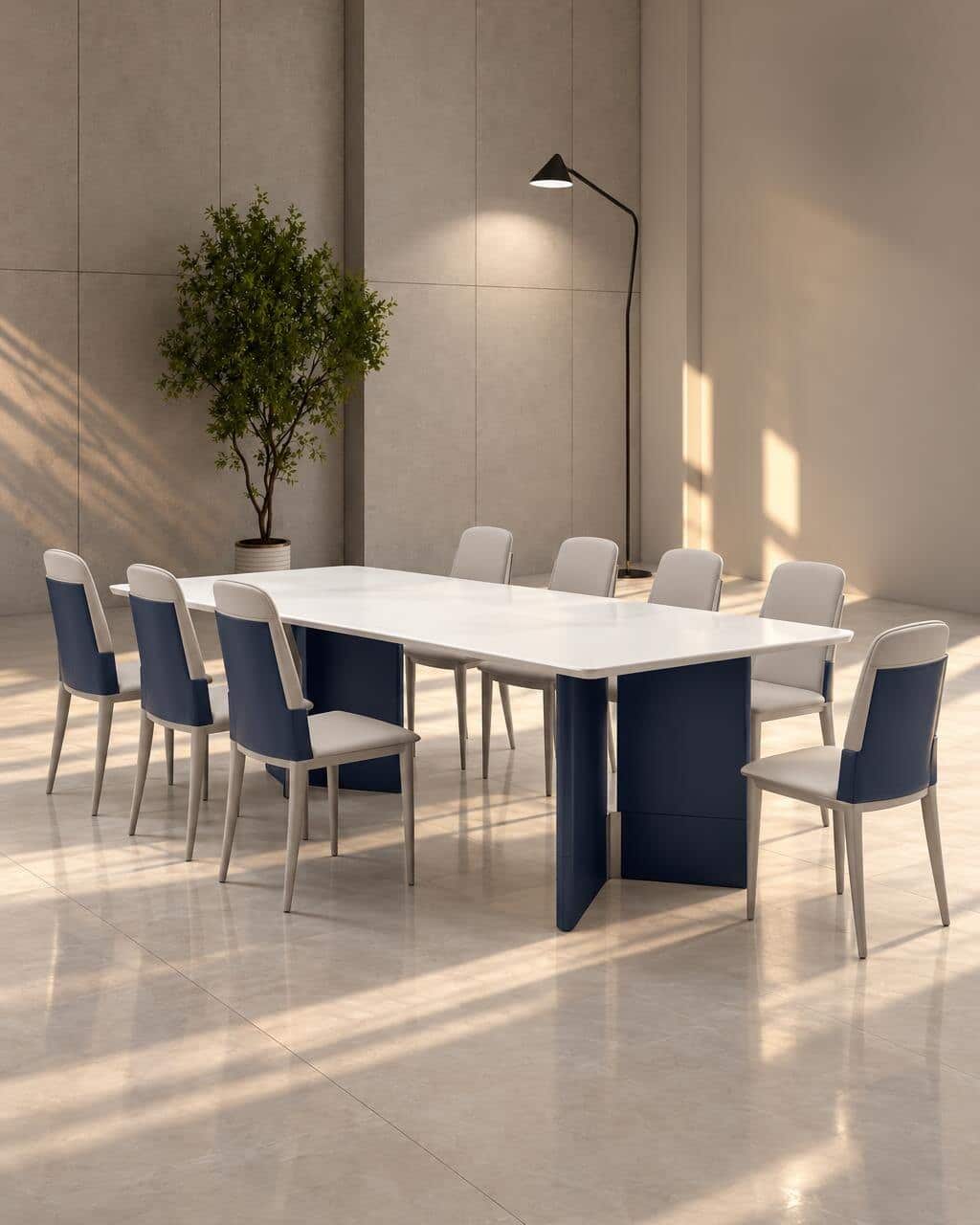
Plan the table and chairs as one arrangement. Check where the legs fall beneath the top, how chairs pull out and how people pass behind occupied seats. Compare everyday seating with the space required when guests arrive. Different tops and finishes need their own care guidance, so ask about the actual material. If an extending design interests you, confirm its closed and open dimensions before deciding.
Making a Smaller Footprint Work
Mark the full footprint on the floor, including handles, open doors or extended sections where relevant. Keep the main route through the room usable and check how adjacent furniture is reached. Compare the usable surface, seat or storage area rather than judging only the overall width. A smaller piece is useful when it still supports your everyday activities without creating a new access problem.
Details That Affect Your Decision
A the dining furniture needs a layout that works while people are sitting and moving around the table. Begin with the number of everyday users and the room’s fixed routes. The goal is to use the available space comfortably, rather than choosing the largest set that can be squeezed into it.
Small dining rooms: the dining furniture Planning: Draw the Usable Space
For this choice, mark doors, windows, cabinet openings and the route through the room. Measure the table footprint and consider chairs both tucked in and pulled out. If the dining area shares a living room, include the sofa and its access route in the same plan.
this choice: Test a footprint before selecting a set
Use removable tape to outline a candidate table. Place existing chairs around the outline if available, then sit down and stand up. Open nearby cupboards and walk through the area. This test reveals conflicts that are hard to judge from a room photograph.
this choice: Compare Shapes with the Actual Route
A round table changes how people move around its edge, while a rectangular table may align with a long or narrow space. Compare both in the plan. Neither shape guarantees a smaller footprint once the chairs and access space are included.
Check the base and chair positions
Table legs or a pedestal can affect foot space and where chairs fit. Review the complete arrangement, including the width of each chair. A claimed seating capacity is useful only when the intended chairs fit comfortably around that specific table.
Small dining rooms: Keep Storage Proportionate
When assessing this choice, add a buffet only if its storage purpose justifies the space it occupies. Test its doors and drawers against the table and chairs. If the room already has accessible storage elsewhere, a smaller dining arrangement may work better.
Choose Everyday Seating First
Plan for the people who use the space most often. Occasional hosting should be considered without blocking the normal layout. Ask about alternative configurations only where they are available for the chosen furniture.

this choice FAQ
Small dining rooms: Is a round table always better for a small room?
No. Compare table and chair footprints with the actual room shape and routes.
Can I place the table near a wall?
Check which seats remain usable and whether chairs can be pulled out without obstructing access.
Compare the dining furniture collection from EL MALEK Furniture. Request current model details and written confirmation of your selected options before ordering.
For a related decision, read our dining table design ideas.
Compare the Complete Purchase Proposal
Prepare a short record for the model you are considering, including its photograph, external dimensions, chosen material and finish. Put its footprint on your room plan beside the furniture that will remain. Keep any approved samples with their references so that a later change in lighting or screen color does not become the basis for an unintended specification change.
Questions for the Supplier
- Which dimensions describe the finished piece, and which describe usable space?
- Which materials and finishes are included in the quotation?
- Does the proposal include delivery and assembly, and what access information is required?
- What are the written payment, warranty and production arrangements?
Compare quotations for equivalent specifications. A lower figure may cover a different size, finish or set of inclusions, so ask for those differences to be explained before making a decision. Where a function or mechanism matters, request confirmation for the exact model rather than treating a similar photograph as evidence of that feature.
Small dining rooms: Keep a Clear Order Record
Retain the approved specification, invoice and care guidance together. At delivery, compare the piece with that record and test the available functions according to the supplier’s instructions. Document any visible concern before completing acceptance, and use the order reference when asking for follow-up support.
Follow EL MALEK Furniture for our latest designs on Instagram, Facebook, TikTok, YouTube, LinkedIn.
Before ordering small dining rooms, compare the chosen model with your approved specification and the room plan. Keep the supplier’s confirmed details with the order.


Leave a Reply