

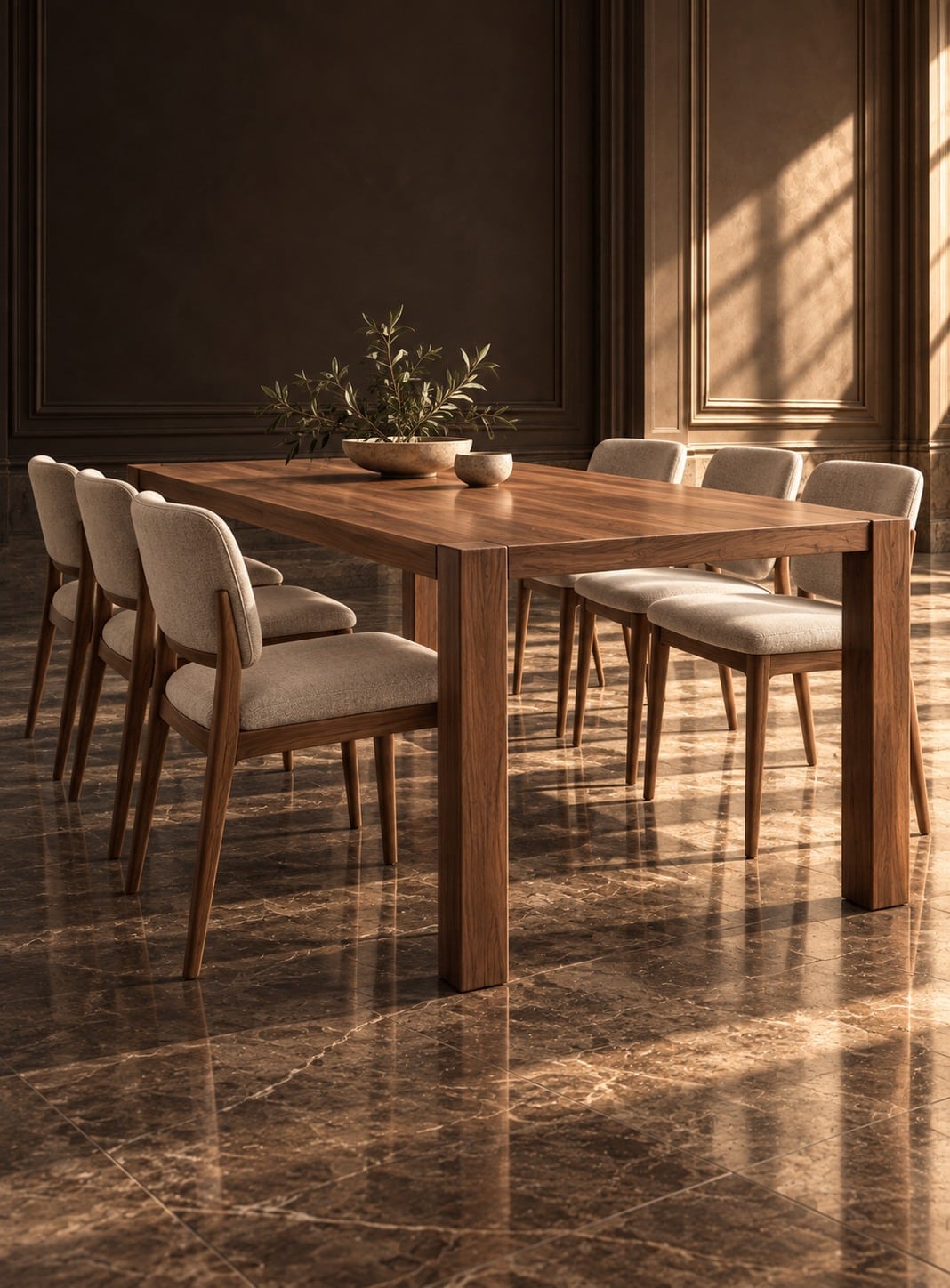
Foot space beneath the top deserves attention, making dining table leg placement important when planning the seating arrangement. Dining-table legs can govern chair positions more than tabletop length. A nearby leg may conflict with feet or knees and prevent chairs from tucking in. Draw each leg position and compare it with actual seating, especially at the table ends.
Dining Table Leg Placement: Key Checks
- Mark legs on the tabletop plan.
- Test every seating position.
- Check chair access at the ends.

dining table leg placement: A practical room example
For dining table leg placement, side seats may work while an end seat becomes awkward because of leg placement. Do not approve a total capacity before trying the different positions around the set.
Common Mistakes to Avoid
Do not judge from a top view alone. Check leg shape and projection at foot level.
When assessing dining table leg placement, use “Mark legs on the tabletop plan” as the starting check, then confirm the other two points for the same model or arrangement. The aim is a decision that supports the described use, rather than accepting a general product label.

Questions about the selected arrangement
Are legs near the ends always better?
No. Their shape, chair dimensions and access determine suitability for each arrangement.
Compare the dining-room furniture collection from EL MALEK Furniture, then assess the chosen model against the checks above. Confirm model-specific details through documented information or written supplier confirmation before ordering.
Follow EL MALEK Furniture for our latest designs on Instagram, Facebook, TikTok, YouTube, LinkedIn.


Leave a Reply