

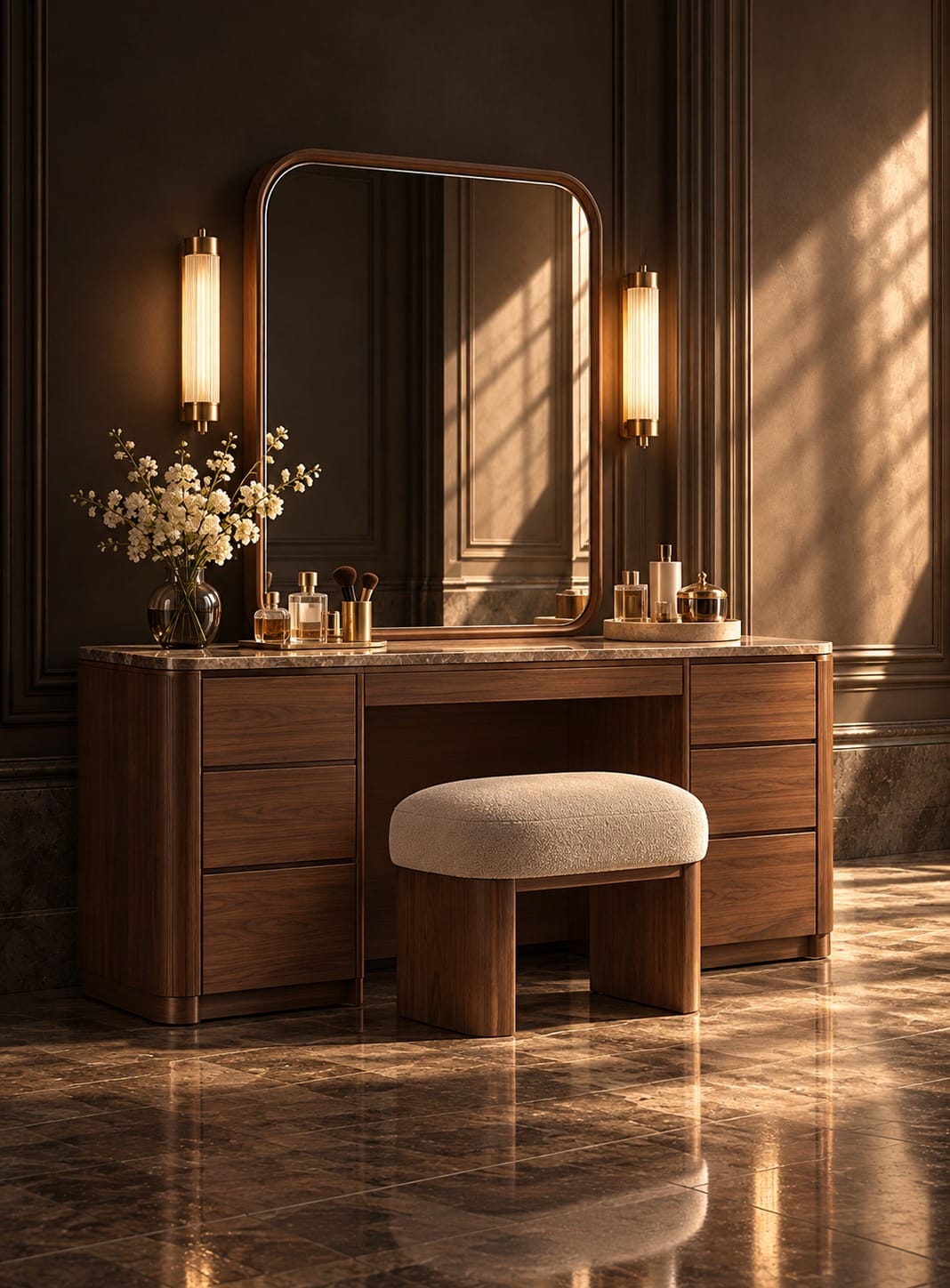
Reflections and shadows can affect everyday use, so assess dresser mirror lighting from the position where you will sit. A mirror does not create light; its position determines what it reflects and how a face appears in front of it. Dressing-table planning therefore depends on daylight direction and nearby lighting. Test the mirror in its intended location rather than relying on a showroom reflection.
Dresser Mirror Lighting: Key Checks
- Check daylight direction.
- Test the usual evening lighting.
- Inspect lamp reflections from eye level.
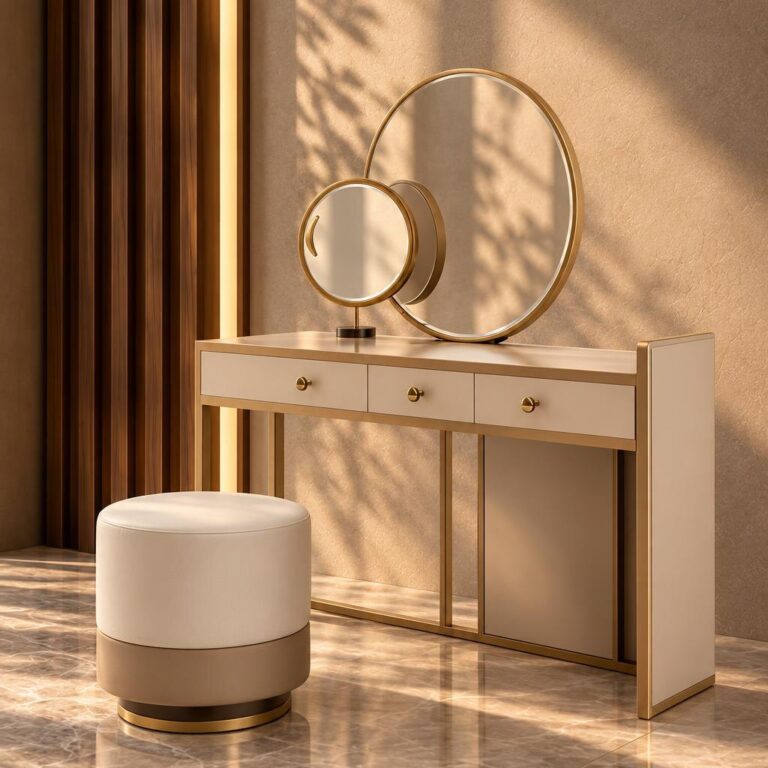
dresser mirror lighting: A practical room example
For dresser mirror lighting, A dressing table may look well lit in the morning yet show strong shadows in the evening. Test both conditions before fixing the mirror, and coordinate electrical changes with the relevant specialist.
Common Mistakes to Avoid
Do not position the mirror so a distracting light source reflects directly toward the eyes. Mirror size alone does not solve lighting problems.
When assessing dresser mirror lighting, use “Check daylight direction” as the starting check, then confirm the other two points for the same model or arrangement. The aim is a decision that supports the described use, rather than accepting a general product label.
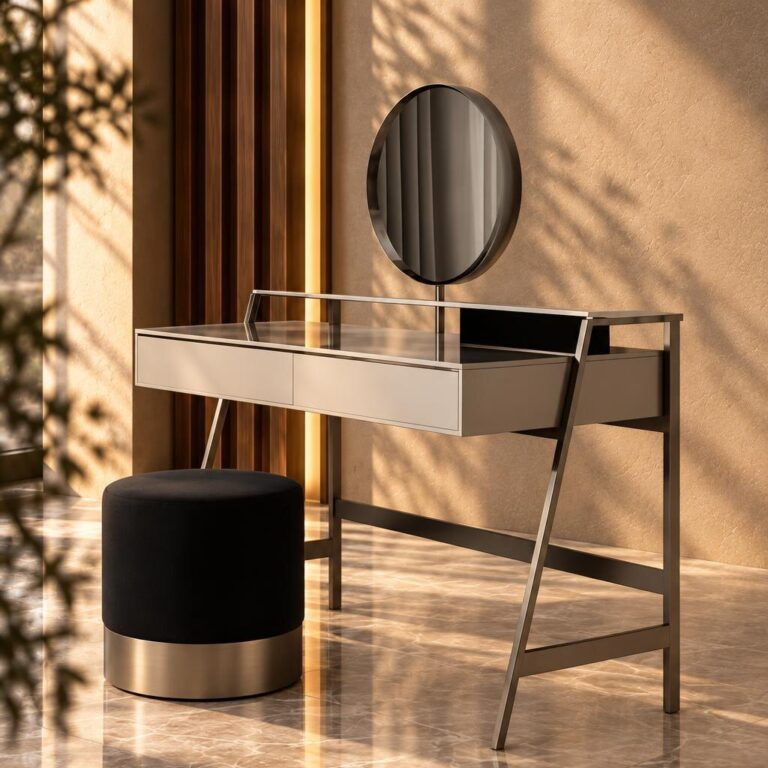
Questions about the selected arrangement
Does a larger mirror remove all shadows?
No. Light-source direction and the user's position matter more than simply increasing mirror area.
Compare the bedroom furniture collection from EL MALEK Furniture, then assess the chosen model against the checks above. Confirm model-specific details through documented information or written supplier confirmation before ordering.
Follow EL MALEK Furniture for our latest designs on Instagram, Facebook, TikTok, YouTube, LinkedIn.


Leave a Reply