

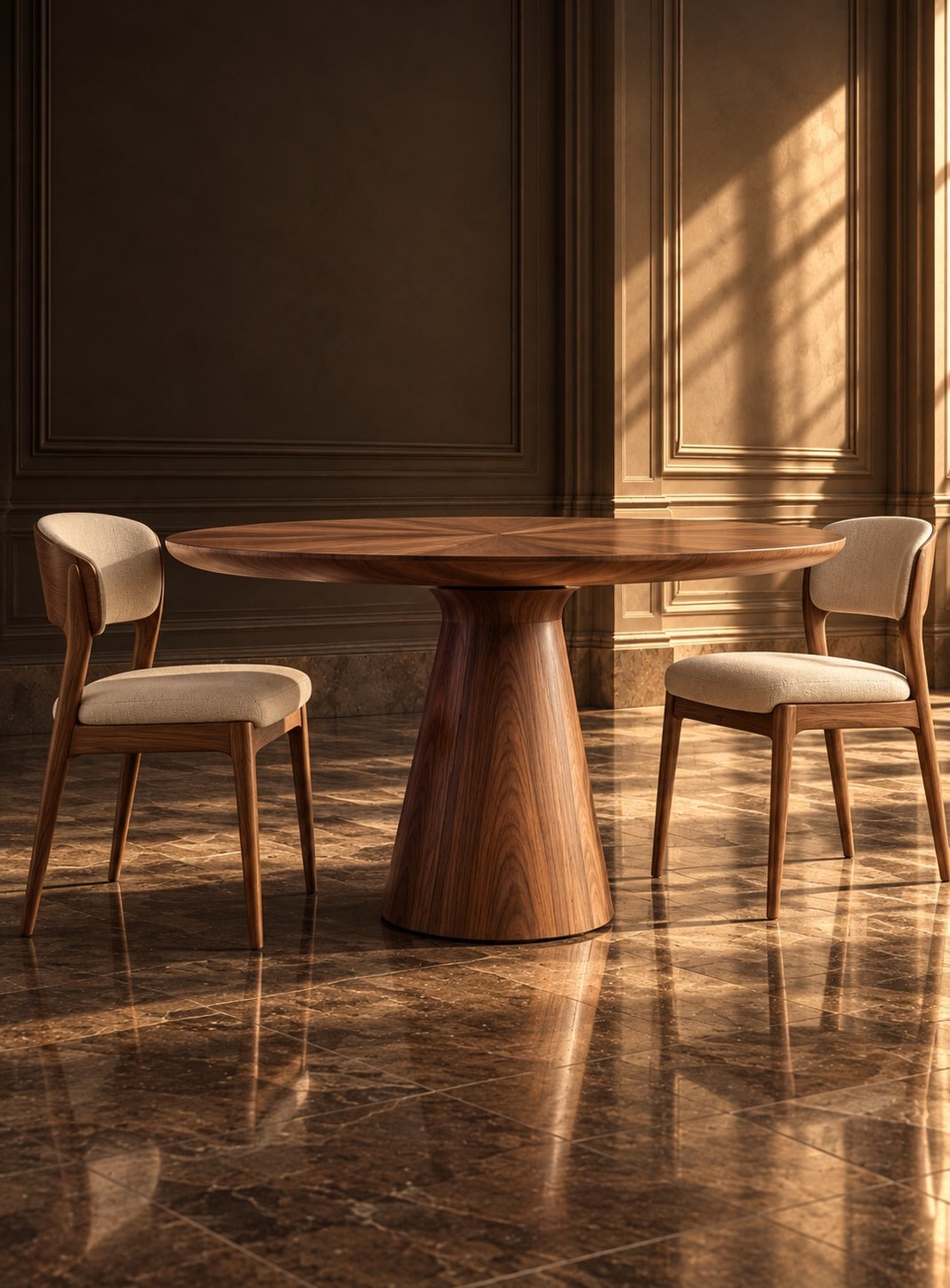
A single central base changes the space around each seat, so assess pedestal dining table seating through foot clearance and the proposed arrangement. A central pedestal changes under-table obstructions but does not remove the need to assess foot space and stability. Its lower base may extend beyond the upper support and interfere with chairs. Inspect the whole model rather than treating the absence of corner legs as an automatic solution.
Pedestal Dining Table Seating: Key Checks
- Check the base footprint at floor level.
- Test foot space from different seats.
- Request installation and use instructions.

pedestal dining table seating: A practical room example
For pedestal dining table seating, the central support may allow a different chair arrangement while its footplate obstructs one particular seat. Test that position separately rather than assuming the other seats prove it works.
Common Mistakes to Avoid
Do not infer greater stability or load capacity from appearance. Those claims require model specifications.
When assessing pedestal dining table seating, use “Check the base footprint at floor level” as the starting check, then confirm the other two points for the same model or arrangement. The aim is a decision that supports the described use, rather than accepting a general product label.

Questions about the selected arrangement
Does a pedestal always allow more chairs?
It can change the arrangement, but capacity follows tabletop, chair and base dimensions and usable space.
Compare the dining-room furniture collection from EL MALEK Furniture, then assess the chosen model against the checks above. Confirm model-specific details through documented information or written supplier confirmation before ordering.
Follow EL MALEK Furniture for our latest designs on Instagram, Facebook, TikTok, YouTube, LinkedIn.


Leave a Reply