

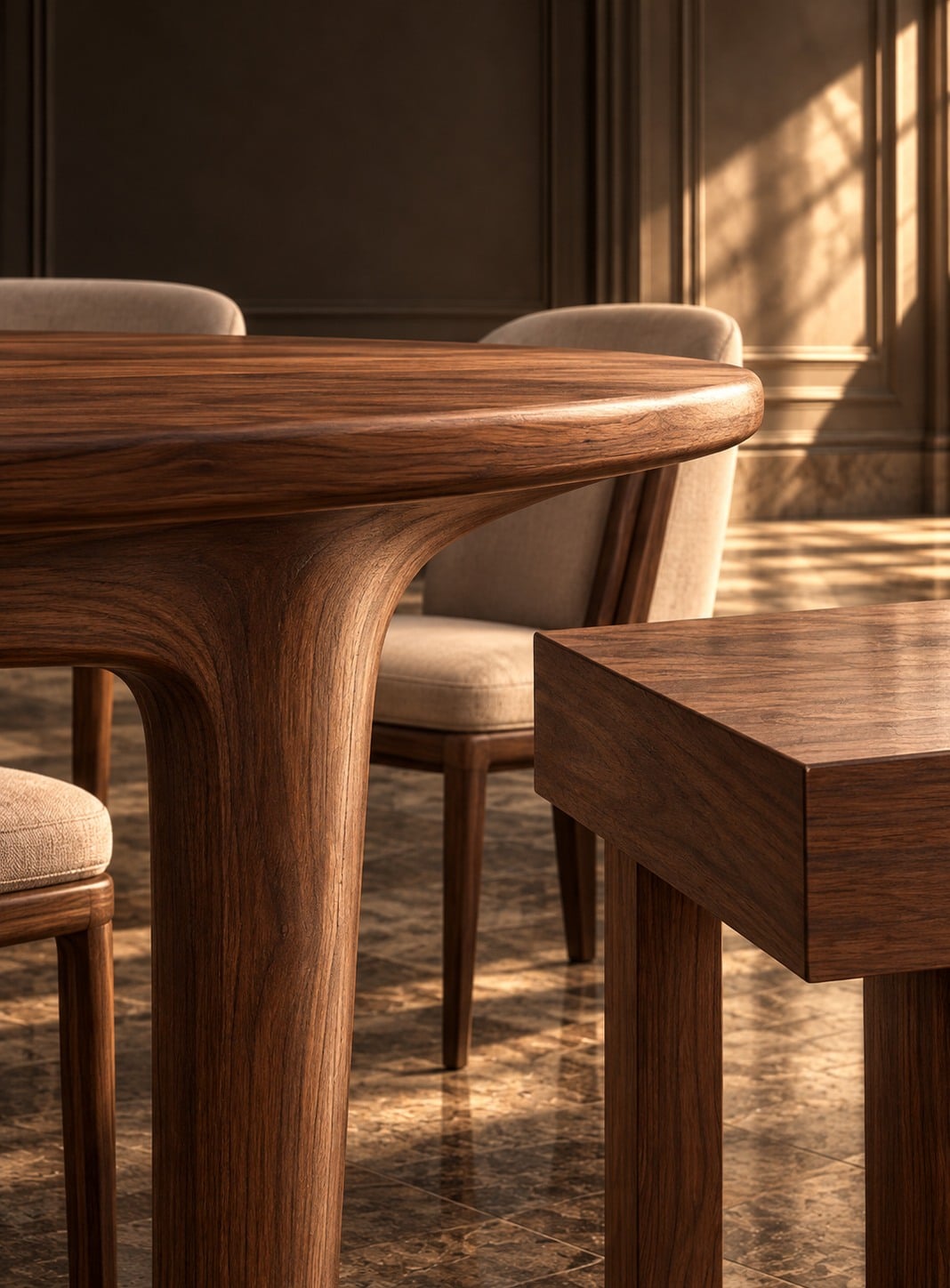
The tabletop edge affects both appearance and contact during use, making the dining table edge profile worth examining closely. The table edge affects feel, projection and the seated appearance. Similar tops can have different edge details, including apparent thickness and the underside. Inspect the model visually and through normal permitted handling, and check whether projection affects chair access.
Dining Table Edge Profile: Key Checks
- Inspect the edge above and below.
- Test approach while seated.
- Compare the detail with the approved reference.
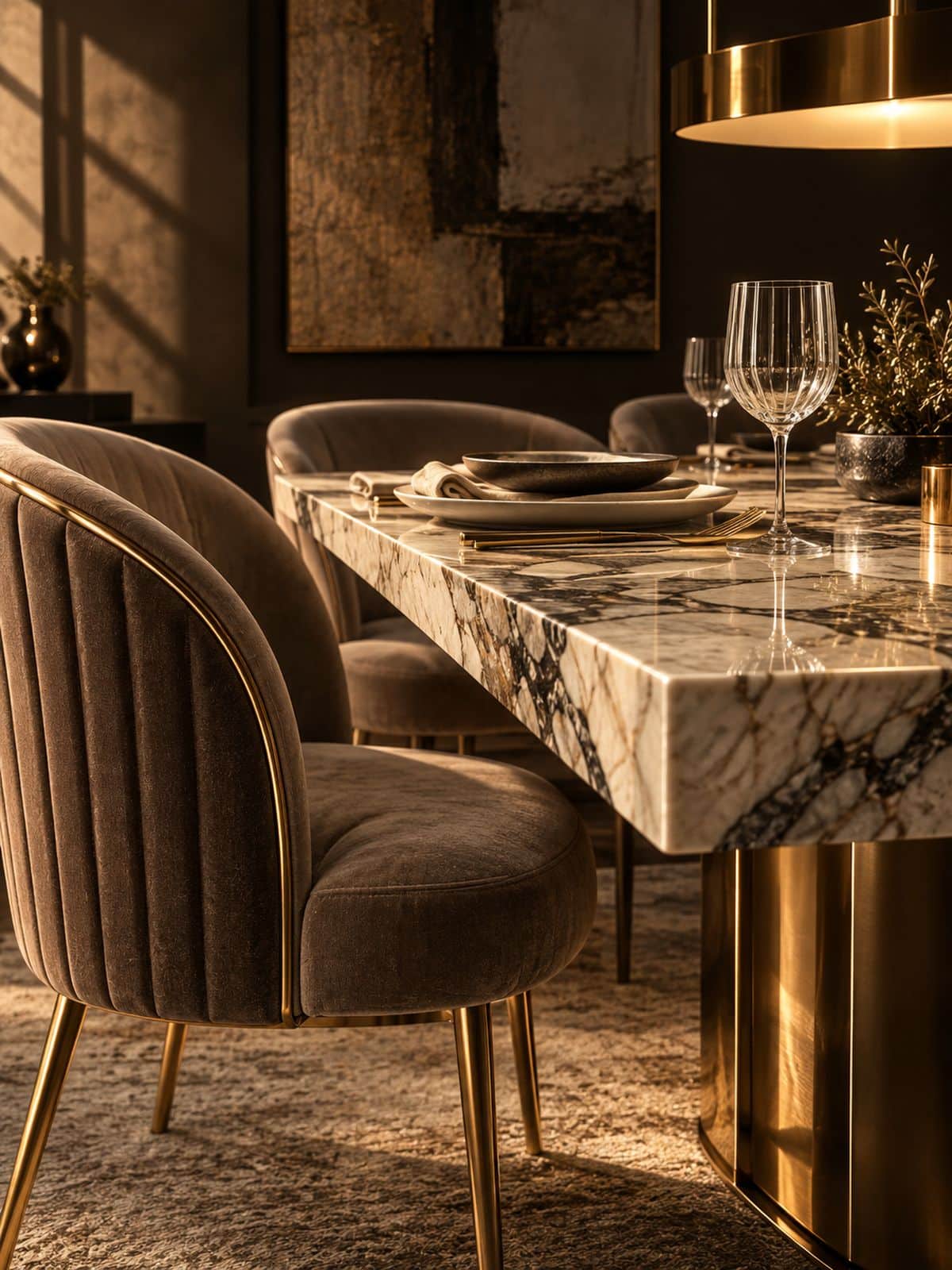
dining table edge profile: A practical room example
For dining table edge profile, A projecting edge may look attractive but change arm or chair position beneath it. Test the complete pairing instead of approving the edge as an isolated decorative feature.
Common Mistakes to Avoid
Do not treat a curved edge as a safety guarantee or infer internal material thickness from edge appearance alone.
When assessing dining table edge profile, use “Inspect the edge above and below” as the starting check, then confirm the other two points for the same model or arrangement. The aim is a decision that supports the described use, rather than accepting a general product label.
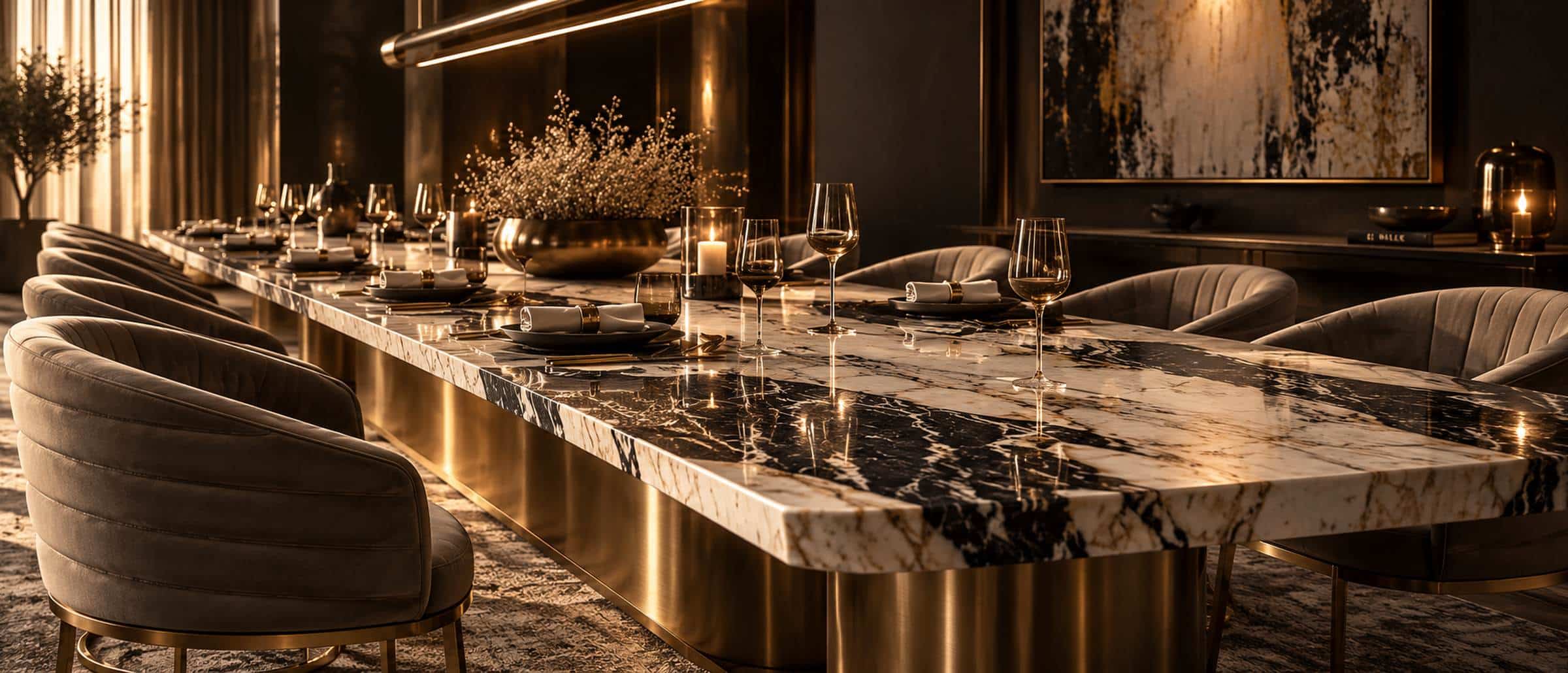
Questions about the selected arrangement
Does edge thickness equal the actual top thickness?
Not always. Request the top's construction details and actual dimensions when that information matters.
Compare the dining-room furniture collection from EL MALEK Furniture, then assess the chosen model against the checks above. Confirm model-specific details through documented information or written supplier confirmation before ordering.
Follow EL MALEK Furniture for our latest designs on Instagram, Facebook, TikTok, YouTube, LinkedIn.


Leave a Reply